




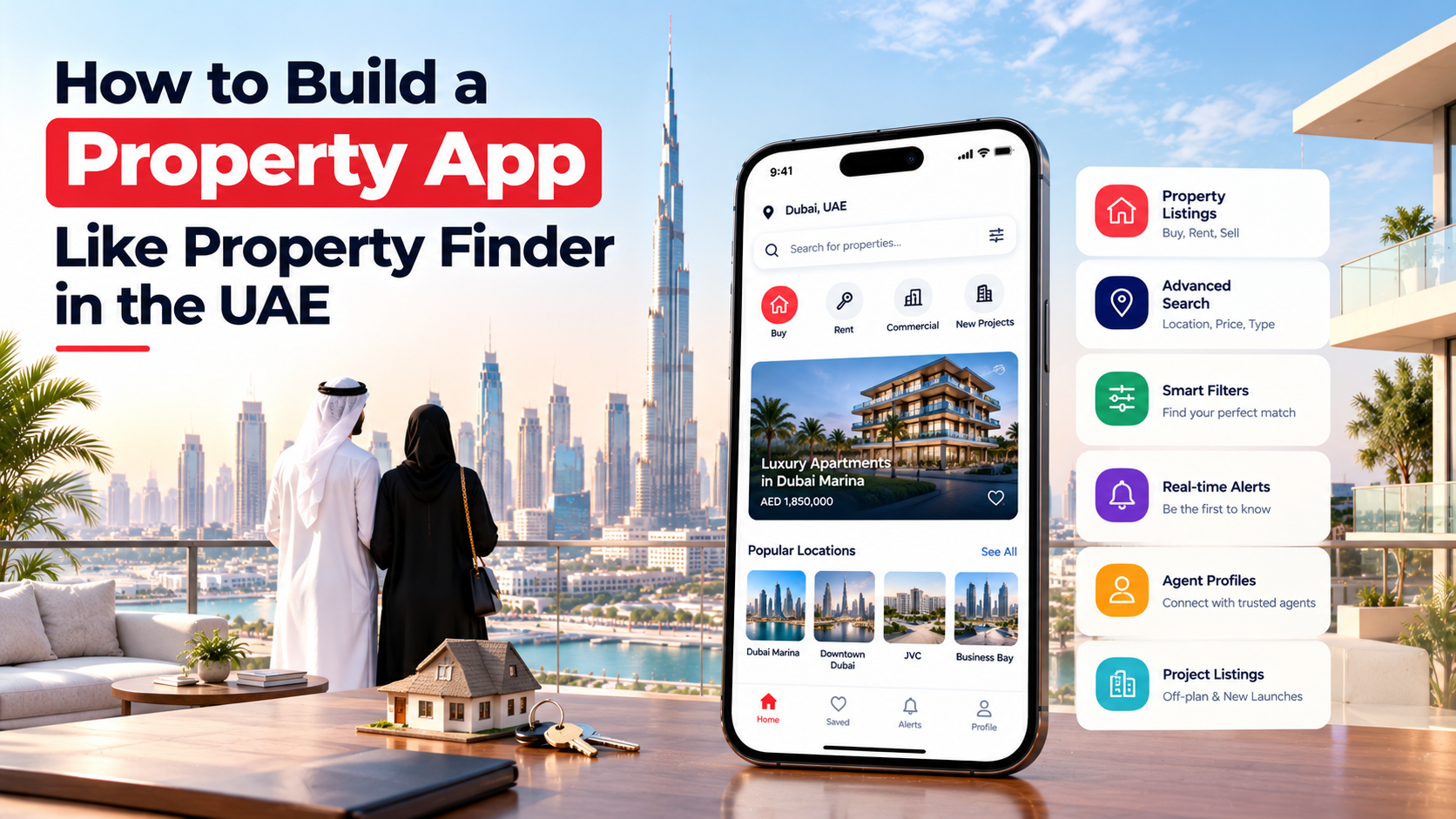
How to Build a Property App Like Property Finder in the UAE
The UAE real estate market offers opportunities for businesses looking to connect property buyers, tenants, landlords, and agents through digital platforms. For entrepreneurs exploring this opportunity, partnering with a Real Estate App Development Company in Dubai can help turn a property technology idea into a practical mobile application. A property app similar in concept to Property Finder can bring property listings, search filters, maps, agent profiles, inquiries, and saved properties into one convenient experience.
However, building a successful property app involves more than displaying available homes. Businesses need a clear revenue model, reliable listing management, an intuitive user experience, accurate property information, and a technology platform that can scale as the business grows.
This guide explains how to plan, develop, and launch a property app in the UAE, including essential features, development stages, cost factors, technology choices, and ways to create a sustainable real estate business.
What Is a Property App Like Property Finder?
A property listing app allows users to discover, compare, and enquire about properties through a website or mobile application. Platforms in this category typically serve several groups: people looking to buy or rent, property owners, real estate agents, and property agencies.
A Property Finder-style application may include:
- Residential and commercial property listings
- Properties for sale and rent
- Search filters and map-based discovery
- Property photographs, videos, and descriptions
- Agent and agency profiles
- Contact and inquiry options
- Saved listings and property alerts
- Featured listings and advertising packages
The goal is to help users find relevant properties while giving agents and property businesses effective tools to promote their inventory and manage leads.
A new business does not need to replicate every feature of an established platform on day one. It can start with a specific audience, location, or property category and expand as it learns from users.
Why Should Businesses Build a Property App in the UAE?
Property discovery is well suited to mobile experiences because users often want to browse listings, compare locations, save options, and contact agents while on the move. A dedicated app can make these activities easier and give property businesses a direct digital channel to engage their audience.
Reach Buyers, Tenants, and Investors
A property platform can bring listings from different owners or agencies into a single searchable experience. Users can compare properties based on budget, location, size, and other relevant criteria instead of searching through disconnected sources.
Generate Leads for Real Estate Agencies
An app can connect interested users with agents through inquiry forms, phone calls, messaging, or appointment requests. Lead tracking can also help agencies understand which listings attract attention and where inquiries originate.
Create Recurring Revenue Opportunities
Depending on the business model, revenue may come from agent subscriptions, featured listings, advertising, qualified lead packages, or enterprise tools for property agencies. Each model needs a clear value proposition so customers understand what they are paying for.
Build a Specialized Property Platform
Instead of competing across every segment, a business might focus on rental properties, commercial real estate, off-plan developments, luxury homes, or a specific emirate. A focused proposition can help define the initial product and marketing strategy.
What Features Should a Property App Include?
Feature planning is one of the most important stages of property app development. The right starting point is to identify the needs of each user group and prioritize functionality that supports the core property-search journey.
1. Property Search and Advanced Filters
Search is central to the user experience. Users should be able to explore properties by location, price range, property type, number of bedrooms, size, and sale or rental status.
Depending on the audience, useful filters may also include furnished status, amenities, availability, and other property-specific criteria. Filters should be easy to use without making the interface feel complicated.
2. Property Details
Each listing should provide enough information for users to decide whether to make an inquiry. Important details may include:
- Property title and description
- Price and payment information, where applicable
- Property type and size
- Number of bedrooms and bathrooms
- High-quality photographs and video tours
- Amenities and building facilities
- Location information
- Listing status and last-updated information
- Agent or agency contact details
Accurate, current listing information is essential. Outdated prices, unavailable properties, or misleading photographs can reduce trust and create unnecessary work for agents.
3. Map-Based Property Discovery
Map integration allows users to explore properties by neighbourhood or area. Users can switch between map and list views, compare locations, and understand how listings relate to nearby facilities.
Location functionality should be designed with privacy in mind. An app should request access to a user’s device location only when needed and explain the purpose clearly.
4. User Accounts and Saved Properties
Users may want to create accounts, save listings, maintain a shortlist, and receive notifications when matching properties become available.
For a first release, account registration should remain straightforward. Avoid requesting unnecessary personal information before users can explore the platform.
5. Agent and Agency Profiles
Agent profiles help users understand who is advertising a property and how to contact them. Agency accounts may require tools for managing listings, updating property details, responding to leads, and viewing performance reports.
If the platform permits agents to upload listings themselves, the onboarding process should include appropriate verification and review procedures.
6. Inquiry and Appointment Management
The app should make it easy for users to express interest. Depending on the business model, this might include contact forms, click-to-call, messaging, viewing requests, or appointment scheduling.
A lead-management dashboard can help agents track new inquiries, follow up, and avoid overlooking potential customers.
7. Admin Dashboard and Listing Moderation
An administrative dashboard gives the platform owner control over operations. It may include user management, listing approvals, agent verification, content moderation, subscription management, reporting, and complaint handling.
Moderation is particularly important for marketplaces that accept listings from multiple agencies or property owners.
Advanced Features to Consider After Launch
Advanced features can make a property platform more useful, but they should be introduced when they support a clear business objective.
- AI-powered recommendations: Suggest listings based on a user’s stated preferences and relevant activity.
- Saved-search alerts: Notify users when properties match saved criteria.
- Virtual tours: Help users explore properties remotely through supported media.
- Lead analytics: Show agencies how listing views, inquiries, and engagement change over time.
- Automated listing assistance: Help agents organize property descriptions, subject to human review.
- Multilingual support: Consider Arabic and English where appropriate for the intended audience.
- Subscription management: Allow agencies to manage plans, featured listings, and account details.
- Duplicate listing detection: Flag potentially repeated listings for review.
AI-generated descriptions and recommendations should not introduce unsupported property claims. Important details such as prices, availability, location, and ownership-related information should be checked against reliable sources.
How to Build a Property App Like Property Finder
A structured development process helps businesses control scope, identify risks early, and make better investment decisions.
Step 1: Define Your Business Model
Decide whether the platform will serve buyers, tenants, landlords, agents, developers, or a combination of these groups. Identify the initial property categories and the geographical area you want to serve.
Also decide how the business will generate revenue. This choice affects account types, billing features, dashboards, and the way listings are promoted.
Step 2: Research the Market and Competitors
Study existing property platforms to understand their search experiences, listing formats, and customer journeys. Look for specific gaps your product could address, such as a specialized property category, better listing quality, or simpler lead management.
The aim is not to copy a competitor’s protected design or proprietary functionality. It is to understand user expectations and create a differentiated product.
Step 3: Define the MVP
An MVP, or minimum viable product, is the first usable version that tests the core business idea. A property app MVP might include property search, listing details, filters, agent contact options, user accounts, and an administration dashboard.
Features such as AI recommendations, virtual tours, complex subscription plans, and advanced analytics can be evaluated for later releases.
Step 4: Design the UI/UX
Create wireframes and interactive prototypes before starting full development. Test whether users can find a property, understand the listing, save it, and contact the agent without confusion.
A clean interface, readable property information, consistent image quality, and simple navigation can make a meaningful difference to the user experience.
Step 5: Choose the Technology Stack
Your development team should recommend a technology stack based on the required features, performance, budget, integrations, and long-term maintenance needs.
The solution may include Android and iOS applications, a backend service, a web-based administration dashboard, a database, and third-party APIs for maps, notifications, or other functionality.
Step 6: Develop the App and Backend
Development connects the interface to the data and business rules behind the platform. The backend needs to manage listings, accounts, search, permissions, inquiries, subscriptions, and moderation workflows.
Security controls and access permissions should be planned from the beginning rather than added only after launch.
Step 7: Test Before Launch
Test the app on supported devices and screen sizes. Verify search filters, listing updates, account access, image loading, notifications, and inquiry flows.
Also test error handling, performance, accessibility, and how the platform responds to incomplete or inaccurate listings. Resolve important issues before inviting a wider audience.
Step 8: Launch, Measure, and Improve
After launch, track meaningful indicators such as listing views, searches, saved properties, qualified inquiries, agent response times, and returning users.
Use this information to decide which improvements are most valuable. A property app should evolve based on user needs and business performance rather than adding features simply because competitors have them.
How Much Does It Cost to Develop a Property App in the UAE?
The cost depends on the number of applications, feature complexity, design requirements, integrations, and the amount of administration functionality required. The following figures are broad planning estimates rather than verified market quotations.
| Project Type | Indicative Development Budget |
|---|---|
| Basic property listing MVP | $15,000–$35,000 |
| Mid-level property marketplace | $35,000–$75,000 |
| Advanced property platform | $75,000–$150,000+ |
A simple listing product with limited account types and essential search functionality will generally require less work than a multi-sided marketplace with agent subscriptions, advanced search, analytics, verification, and personalized recommendations.
Other costs may include hosting, third-party API usage, ongoing maintenance, marketing, customer support, and content moderation. Business licensing and compliance-related expenses should be assessed separately based on the proposed operating model.
Before committing to a budget, request a detailed quotation that separates development, integrations, deployment, and post-launch support.
Android or iOS: Which Should You Build First?
Your target audience and launch strategy should guide your platform decision.
An Android App Development Company can help build an Android version of your property application, while an iOS App Development Company can develop the equivalent experience for Apple devices.
You may choose to launch on both platforms or begin with one, depending on the audience, budget, and validation strategy. Cross-platform frameworks can share code between operating systems, although device-specific functionality and testing still require attention.
For some businesses, a responsive website may also be important because users often discover property listings through search engines. A website and mobile app can serve complementary roles: the website can help users discover public listings, while the app can support saved searches, alerts, and repeat engagement.
How to Choose a Real Estate App Development Partner
Choosing a development partner is not simply a matter of comparing the lowest quotes. The team should understand marketplace workflows and be able to explain how the proposed system will support the business.
Before signing a contract, evaluate:
- Relevant marketplace or property technology experience
- Quality of UI/UX design and technical planning
- Clarity of project scope and deliverables
- Approach to security, privacy, and data management
- Search performance and listing architecture
- Integration requirements and third-party costs
- Testing and quality assurance
- Code ownership and documentation
- Maintenance, support, and future enhancements
A capable Mobile App Development Company in Dubai should explain the trade-offs between different technical approaches and help you prioritize the features that matter most.
When evaluating a Mobile App Development Company in UAE, ask for a milestone-based proposal with clear acceptance criteria. This makes it easier to assess progress and understand what is included in the final delivery.
A reliable Mobile App Development Company should also be transparent about assumptions, dependencies, and limitations. Avoid making a decision based only on promises of fast delivery or guaranteed business results.
How A2Solutions Can Help With Property App Development
A2Solutions can be considered as a development partner for businesses planning a custom property marketplace or real estate mobile application. The starting point should be your business model, intended users, initial market, feature priorities, and budget.
For a property app, the development scope may include mobile interfaces, property search and filters, agent accounts, listing management, inquiry workflows, an administration dashboard, and relevant integrations.
The right solution depends on whether you want to serve a specific real estate niche, support multiple agencies, or build a broader property discovery platform. A focused first release can help establish the core experience before additional functionality is introduced.
If you are planning to launch a property app in the UAE, discuss your requirements with A2Solutions to determine the appropriate scope, technology approach, development stages, and project estimate.
Final Thoughts
Building a property app like Property Finder in the UAE can create a digital opportunity for entrepreneurs, real estate agencies, property businesses, and startups. Success depends on more than the application itself: the platform needs useful listings, a clear user experience, effective lead management, and a sustainable business model.
Start with a well-defined audience and a practical MVP. Prioritize search quality, listing accuracy, agent workflows, and user trust before investing in every advanced feature. Then use real customer feedback and business data to guide future development.
With a clear plan and the right development partner, you can build a property platform designed around your business goals and the needs of the UAE real estate market.
Frequently Asked Questions
How much does it cost to build a property app like Property Finder?
A basic property listing MVP may cost approximately $15,000–$35,000, while a more advanced marketplace may cost $75,000–$150,000 or more. The actual cost depends on the features, platforms, integrations, and scope.
How long does it take to develop a real estate app?
A basic MVP may take around three to six months, while a more complex platform may require six to twelve months or longer. These are planning estimates, and the actual timeline depends on requirements, team capacity, integrations, and testing.
What are the essential features of a property app?
Core features include property search, filters, detailed listings, map-based discovery, saved properties, agent contact options, user accounts, and an admin dashboard for listing management and moderation.
Can I build a property app for both Android and iOS?
Yes. You can build native applications for both operating systems or consider a cross-platform framework. The best approach depends on your feature requirements, budget, expected performance, and maintenance plan.
How can a property listing app generate revenue?
Potential revenue models include agent subscriptions, paid featured listings, advertising packages, lead-generation services, and tools for real estate agencies. The best model depends on your target customers and the value the platform provides.
Should I add AI features to a real estate app?
AI can help with property recommendations, search assistance, listing organization, and analytics. However, it is usually sensible to establish reliable search and listing management first, then introduce AI features that solve clear user or business problems.
What should I prepare before hiring a development company?
Prepare a brief explaining your target audience, property categories, launch area, core features, revenue model, budget range, preferred platforms, and expected timeline. You should also identify how listings will be sourced, verified, and updated.
