




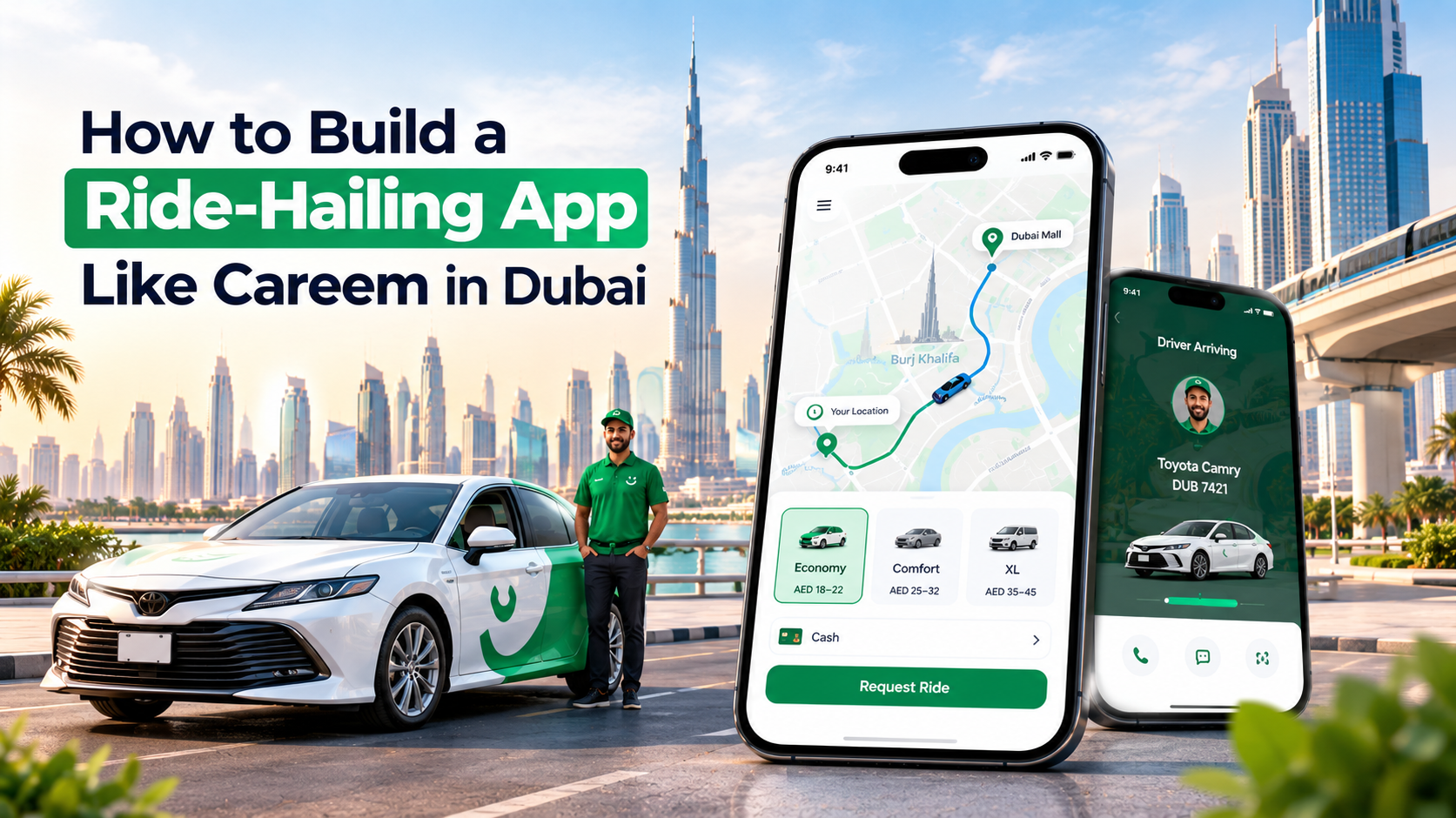
How to Build a Ride-Hailing App Like Careem in Dubai?
For founders and business owners planning to enter the mobility sector, choosing the right Taxi Booking App Development Company in Dubai, UAE can be an important step toward turning a transportation idea into a scalable digital business. A ride-hailing app can connect passengers with drivers, simplify bookings, manage payments, provide real-time trip tracking, and create a convenient transportation experience through a mobile platform.
Building an app like Careem, however, involves much more than creating a taxi-booking interface. A successful ride-hailing platform needs customer and driver applications, an administration system, location services, route management, fare calculation, secure payments, real-time notifications, driver onboarding, trip management, analytics, and a reliable backend infrastructure.
For entrepreneurs considering a new mobility startup or established businesses looking to create their own transportation platform, the right approach is to start with the business model and customer experience before selecting technology.
This guide explains how to build a ride-hailing app like Careem in Dubai, including essential features, business models, development steps, technology choices, cost factors, monetization, AI opportunities, and practical considerations for launching an MVP.
What Is a Ride-Hailing App?
A ride-hailing app is a mobile platform that allows passengers to request transportation services through an application while enabling drivers to accept and complete those trips.
The platform typically connects three major participants:
- Passengers
- Drivers
- Platform administrators
The passenger uses the application to enter a pickup location, select a destination, choose a ride type, view an estimated fare, request a ride, track the driver, complete payment, and provide feedback.
Drivers use a separate application or driver interface to manage availability, receive trip requests, navigate to passengers, complete rides, and monitor earnings.
The business operating the platform manages users, drivers, trips, payments, commissions, pricing, promotions, support, analytics, and platform settings through an administration system.
This structure makes ride-hailing applications significantly more complex than basic booking apps.
Why Businesses Should Build a Ride-Hailing App in Dubai
Dubai has a highly connected urban environment where digital services play an important role in how consumers access transportation and other on-demand services.
For entrepreneurs, a ride-hailing application can create opportunities beyond traditional taxi booking.
A business can develop a platform around:
- Standard taxi booking
- Private car services
- Premium rides
- Airport transfers
- Corporate transportation
- Chauffeur services
- Scheduled rides
- Women-focused transportation services
- Business travel
- Intercity transportation
- Specialized mobility services
The opportunity is not necessarily about copying an existing platform feature by feature.
A stronger strategy is to identify an underserved customer segment, operational gap, geographic opportunity, or service category and create a better experience around it.
For example, a business could focus on corporate transportation and offer company accounts, employee ride management, centralized billing, scheduled bookings, and business reporting.
The app becomes valuable because it solves a specific business or customer problem.
How a Ride-Hailing App Like Careem Works
A typical ride-hailing ecosystem consists of three primary components.
Passenger App
Passengers can:
- Create an account
- Set pickup and destination
- View nearby drivers
- Select a vehicle category
- Estimate fares
- Request rides
- Track drivers
- Contact drivers
- Make payments
- View trip history
- Rate drivers
- Receive support
Driver App
Drivers can:
- Register
- Submit required information
- Complete onboarding
- Set availability
- Receive ride requests
- Accept or reject requests
- Navigate to pickup locations
- Start and end trips
- View earnings
- Review trip history
- Receive notifications
- Contact support
Admin Dashboard
The business can manage:
- Passengers
- Drivers
- Vehicles
- Trips
- Payments
- Pricing
- Commissions
- Promotions
- Complaints
- Reviews
- Driver documents
- Service areas
- Reports
- Notifications
This connected ecosystem is the foundation of a ride-hailing business.
Choose Your Ride-Hailing Business Model
Before development begins, founders should decide exactly what type of transportation platform they want to build.
Standard Ride-Hailing
Passengers request rides from available drivers.
The platform can support different vehicle categories and pricing structures.
Premium Ride-Hailing
The platform focuses on higher-end vehicles and chauffeur services.
It may include:
- Premium vehicle categories
- Professional driver profiles
- Scheduled bookings
- Airport transfers
- Corporate accounts
Corporate Transportation
Businesses can use the platform to manage transportation for employees, customers, or executives.
Potential features include:
- Company accounts
- Employee profiles
- Ride authorization
- Corporate billing
- Monthly invoices
- Expense reports
- Travel policies
Airport Transfer Platform
The application can specialize in airport pickups and drop-offs.
This model may require:
- Flight information
- Scheduled bookings
- Driver assignment
- Waiting-time management
- Airport pickup instructions
- Automated notifications
Specialized Mobility Platform
Entrepreneurs can also build platforms focused on specific customer groups or transportation requirements.
The important point is to define the business model before building the application.
Essential Features of a Ride-Hailing App
A successful taxi booking application needs a reliable set of core features.
Passenger Registration and Login
Passengers should be able to create accounts quickly using appropriate authentication methods.
Possible options include:
- Mobile number
- OTP
- Password
- Supported social authentication
The registration experience should remain simple while collecting the information genuinely required by the platform.
Location and GPS
Location services are central to ride-hailing.
The application needs to determine:
- Passenger location
- Driver location
- Pickup point
- Destination
- Route
- Estimated distance
- Estimated travel time
Accurate location functionality is essential because many other features depend on it.
Ride Booking
Passengers should be able to enter their pickup and destination locations and request a ride.
The booking process may include:
- Select pickup location
- Enter destination
- Select ride category
- View estimated fare
- Confirm booking
- Match with a driver
- Track the ride
Vehicle Categories
A platform can offer different ride categories depending on the business model.
Examples include:
- Economy
- Standard
- Premium
- Luxury
- SUV
- Business
- Accessible transportation
Each category can have its own pricing and operational rules.
Driver Matching
The system needs to identify suitable drivers for incoming requests.
Matching logic may consider:
- Driver location
- Availability
- Vehicle type
- Distance from passenger
- Driver status
- Service area
- Other business rules
Efficient matching can reduce passenger waiting time while improving driver utilization.
Real-Time Driver Tracking
Passengers should be able to see relevant driver information and track the driver’s approach to the pickup point.
The driver application should also receive route and navigation information.
Real-time tracking requires reliable location updates and backend communication.
Fare Calculation
The platform needs a pricing engine capable of calculating fares based on business rules.
Factors can include:
- Base fare
- Distance
- Time
- Ride category
- Waiting time
- Booking fees
- Promotions
- Dynamic pricing rules where applicable
Businesses should clearly define their pricing model before implementation.
Secure Payments
A ride-hailing app can support appropriate payment options such as:
- Debit cards
- Credit cards
- Digital wallets
- Other supported payment methods
- Cash where the business model permits it
Payment workflows should be designed with appropriate security controls and reliable payment infrastructure.
Ride History
Passengers should be able to view previous trips, including:
- Date
- Pickup
- Destination
- Driver
- Ride type
- Fare
- Payment status
Drivers should have access to their own trip and earnings history.
Ratings and Reviews
After completing a trip, passengers can rate their experience.
Depending on the business model, the platform may also allow drivers to rate passengers.
Ratings can help businesses monitor service quality and identify operational issues.
Advanced Features for a Modern Ride-Hailing App
Once the core product is validated, businesses can introduce advanced capabilities.
AI-Based Driver Matching
AI and data-driven algorithms can potentially improve driver-passenger matching by analyzing relevant signals such as location, availability, demand, and historical patterns.
The objective should be to improve operational efficiency rather than adding AI simply as a marketing feature.
AI Customer Support
An AI assistant can help passengers with common questions such as:
- Booking information
- Fare questions
- Cancellation policies
- Lost-item guidance
- Payment information
- General support
Complex complaints and sensitive cases can still be routed to human support teams.
Demand Forecasting
Predictive analytics can help the business identify periods or locations where ride demand may increase.
This can support operational planning and driver availability.
Personalized Ride Recommendations
The application can potentially recommend relevant ride categories or services based on customer preferences and previous activity.
For example, frequent airport travelers could receive easier access to airport transfer options.
Scheduled Rides
Passengers can book rides in advance for:
- Airport trips
- Business meetings
- Events
- Medical appointments
- Early-morning travel
Scheduled booking can create an additional service category for the platform.
Corporate Accounts
Businesses can have dedicated accounts for employee transportation.
Potential features include:
- Employee management
- Ride approvals
- Corporate billing
- Expense tracking
- Monthly statements
- Usage reports
Loyalty and Referral Programs
The platform can encourage repeat usage through:
- Loyalty points
- Ride credits
- Referral rewards
- Promotional codes
- Membership benefits
The reward structure should be designed around the economics of the business.
Ride-Hailing App Development Process
A structured development process can help founders control scope and reduce unnecessary development.
Step 1: Define the Business Idea
Start by answering:
- Who are your customers?
- What transportation service will you provide?
- Who will drive for the platform?
- Which areas will you serve?
- How will the business make money?
- What makes the platform different?
These answers form the foundation of the product.
Step 2: Research the Market
Study existing transportation services and identify gaps.
Research:
- Customer expectations
- Driver challenges
- Pricing models
- Booking experience
- Payment options
- Support
- Cancellation processes
- Competitor features
The goal is not to copy competitors but to discover where your product can create additional value.
Step 3: Define the MVP
A ride-hailing MVP could include:
- Passenger registration
- Driver registration
- Driver approval
- GPS and maps
- Ride booking
- Driver matching
- Fare calculation
- Ride tracking
- Payments
- Trip history
- Ratings
- Notifications
- Admin dashboard
Advanced AI, loyalty, corporate accounts, and complex analytics can be introduced later if they are not essential to the initial launch.
Step 4: Design the UI/UX
The design should prioritize speed and clarity.
A passenger should be able to understand:
- Where they are
- Where they are going
- Which ride options are available
- How much the ride may cost
- When the driver will arrive
The driver experience should also be optimized for quick interaction while operating within appropriate safety requirements.
Step 5: Choose the Technology
Depending on the project, the technology stack may include:
- Native Android
- Native iOS
- Flutter
- React Native
- Backend APIs
- Cloud infrastructure
- Database systems
- Maps and location services
- Payment integrations
- Notification services
- Analytics
- AI services
Technology should be selected based on the product requirements, expected scale, integrations, budget, and long-term roadmap.
Step 6: Develop the Passenger and Driver Apps
The development team can build the passenger-facing and driver-facing applications alongside the backend.
The two applications need to communicate reliably with the central platform.
Step 7: Build the Backend and Admin Dashboard
The backend manages the business logic connecting passengers, drivers, and administrators.
It can handle:
- User accounts
- Driver accounts
- Vehicles
- Ride requests
- Matching
- Pricing
- Payments
- Promotions
- Notifications
- Trip history
- Reports
The admin dashboard gives authorized staff control over platform operations.
Step 8: Integrate Maps, Payments and Other Services
Ride-hailing platforms commonly require several external services.
Depending on requirements, integrations may include:
- Maps
- Geolocation
- Routing
- Payment providers
- SMS
- Push notifications
- Analytics
- Customer support tools
- CRM systems
Each integration should be selected according to reliability, security, pricing, and business requirements.
Step 9: Test the Application
Testing should cover complete passenger and driver journeys.
Important areas include:
- Registration
- Driver onboarding
- Location accuracy
- Ride requests
- Driver matching
- Fare calculation
- Trip tracking
- Payments
- Cancellations
- Notifications
- Ratings
- Admin workflows
- Performance
- Security
- Device compatibility
Testing real location and network scenarios is especially important for ride-hailing applications.
Step 10: Launch, Measure and Improve
After launch, monitor real usage and customer feedback.
Important indicators may include:
- Ride requests
- Completed trips
- Cancellation rates
- Driver activity
- Customer retention
- Average waiting time
- Payment issues
- Support requests
- App performance
The product roadmap should evolve based on actual user and operational data.
How Much Does It Cost to Build a Ride-Hailing App in Dubai?
The cost of developing a ride-hailing app depends heavily on its scope.
Important cost factors include:
- Passenger app
- Driver app
- Admin dashboard
- UI/UX complexity
- GPS and mapping
- Driver matching
- Fare calculation
- Payment integration
- Real-time tracking
- Notifications
- Backend architecture
- Third-party APIs
- AI features
- Corporate functionality
- Security
- Testing
- Cloud infrastructure
- Maintenance
A focused ride-hailing MVP will have significantly different requirements from a full-scale platform supporting multiple vehicle categories, corporate accounts, advanced analytics, loyalty programs, and AI capabilities.
Instead of asking only for a generic app price, founders should prepare a feature and business scope and request an estimate based on the actual requirements.
What Can Increase Ride-Hailing App Development Costs?
Multiple Applications
Building passenger, driver, and administration systems increases the overall development scope.
Real-Time Tracking
Location updates, routing, driver tracking, and trip status require reliable backend infrastructure.
Complex Pricing
Multiple fare rules, promotions, scheduled rides, waiting charges, and other pricing models increase development complexity.
Advanced Matching
More sophisticated driver matching can require additional business logic and data processing.
Third-Party Integrations
Maps, payments, CRM, communication, analytics, and other integrations add development and testing requirements.
AI and Analytics
Advanced recommendations, forecasting, intelligent support, and analytics require additional development and infrastructure.
Scalability
A platform intended to grow across multiple locations needs an architecture that can support increasing users, drivers, trips, and transactions.
Native vs Cross-Platform Development
Founders often need to decide whether to build native Android and iOS applications or use a cross-platform framework.
Native development can provide platform-specific optimization and may be appropriate for applications with specialized requirements.
Cross-platform technologies such as Flutter or React Native can help businesses develop for multiple platforms using a shared development approach.
The right choice depends on:
- Target audience
- App functionality
- Performance requirements
- Integrations
- Development resources
- Maintenance
- Budget
- Long-term roadmap
A professional development partner should explain the trade-offs rather than automatically recommending one technology.
How to Choose a Ride-Hailing App Development Company in Dubai
Selecting a development company is one of the most important decisions for a mobility startup.
When evaluating a potential partner, consider:
- Experience with location-based applications
- Passenger and driver app development capabilities
- Backend engineering
- Real-time functionality
- Payment integration experience
- API integration
- UI/UX expertise
- Security practices
- Testing methodology
- Cloud infrastructure
- Post-launch support
Ask potential development partners to explain how they would handle:
- Driver onboarding
- Driver verification
- Ride matching
- Fare calculation
- Real-time tracking
- Payment processing
- Cancellations
- Driver payouts
- Customer support
- Platform scalability
The lowest quotation should not automatically determine the decision.
A cheaper project can become expensive if important functionality is excluded, the architecture is difficult to maintain, or the product requires major redevelopment later.
Working With a Mobile App Development Company in Dubai
A Mobile App Development Company in Dubai can support businesses through different stages of the product journey, from product planning and UI/UX design to mobile development, backend engineering, integrations, testing, deployment, and maintenance.
For founders researching Mobile App Development Dubai, the most important question should be broader than simply finding someone who can code the application.
Ask whether the development partner understands the business model, transportation workflows, customer experience, driver operations, and technical architecture required to run the platform.
A good partner should help turn a business concept into a practical product roadmap.
What Should a Mobile App Development Company in UAE Provide?
A Mobile App Development Company in UAE working on a ride-hailing platform should be able to address the complete product ecosystem.
This may include:
- Passenger application
- Driver application
- Admin dashboard
- Backend
- APIs
- GPS and mapping
- Payment systems
- Notifications
- Analytics
- Cloud infrastructure
- Security
- Third-party integrations
Depending on the target platforms, businesses may also evaluate an Android App Development Company or an iOS App Development Company.
The technology choice should support the business strategy rather than dictate it.
How A2Solutions Can Help Build a Ride-Hailing App
A2Solutions can help businesses transform a ride-hailing concept into a structured mobile product.
The development journey can include:
- Business requirement analysis
- Product planning
- UI/UX design
- Passenger app development
- Driver app development
- Admin dashboard
- Backend development
- API integration
- GPS and mapping integration
- Payment integration
- Notification systems
- AI integration
- Testing
- Deployment
- Maintenance
- Future product improvements
For founders, the objective should be to build an application that works for passengers, drivers, and the business operating the platform.
Starting with a focused MVP can help validate the concept before investing in advanced functionality.
How Can a Ride-Hailing App Make Money?
A ride-hailing business can use different monetization strategies depending on its model.
Potential revenue streams include:
- Commission from completed rides
- Booking fees
- Driver subscription plans
- Premium ride categories
- Corporate accounts
- Airport transfer services
- Promotional partnerships
- Advertising opportunities
- Membership programs
The revenue model should be considered before development because it affects pricing, payment processing, driver management, and administrative functionality.
What Founders Should Prepare Before Building the App
Before approaching a development company, founders should prepare a basic product brief.
Include:
Business Model
Explain what transportation service you plan to offer and how the platform will generate revenue.
Target Customers
Define the customer segments you want to serve.
Driver Strategy
Determine whether drivers will be employees, independent partners, fleet operators, or another model appropriate to the business.
Service Area
Identify the initial geographic area where the application will operate.
Ride Categories
Decide which vehicle or service categories will be available at launch.
Pricing Strategy
Define how fares will be calculated and which pricing rules are required.
MVP Features
Separate essential launch functionality from features that can be introduced later.
Technology Requirements
Consider whether Android, iOS, web, or multiple platforms are required.
Future Roadmap
Think about future capabilities such as:
- AI
- Corporate accounts
- Scheduled rides
- Loyalty
- Advanced analytics
- Fleet management
- Subscription plans
- Expansion into additional locations
Having this information ready can make conversations with a development company more focused and productive.
Frequently Asked Questions
How much does it cost to build a ride-hailing app like Careem in Dubai?
The cost depends on the number of applications, features, UI/UX complexity, GPS and mapping, real-time tracking, payment integration, backend architecture, admin functionality, third-party services, security, testing, and ongoing maintenance. A focused MVP will require a different investment from a full-scale mobility platform.
How long does it take to develop a ride-hailing app?
The timeline depends on the scope and complexity of the passenger app, driver app, admin dashboard, backend, integrations, testing, and development approach. A focused MVP can be planned more efficiently than a platform containing every advanced feature from the beginning.
What are the essential features of a taxi booking app?
Core features generally include passenger registration, driver registration, GPS, maps, ride booking, driver matching, fare calculation, real-time tracking, payments, notifications, trip history, ratings, and administration.
Do I need separate passenger and driver apps?
For a full ride-hailing business model, separate passenger and driver experiences are generally useful because each user type has different workflows, permissions, and requirements. The exact implementation can vary according to the product strategy.
Can I add AI to a ride-hailing app?
Yes. AI can support driver matching, demand forecasting, customer assistance, personalization, fraud detection, analytics, and other workflows. The best approach is to introduce AI where it solves a measurable business or customer problem.
Can I launch a ride-hailing app with an MVP?
Yes. An MVP can focus on the essential passenger, driver, payment, trip, and administration workflows. Additional capabilities can be introduced after the business validates customer demand and operational processes.
Should I build both Android and iOS apps?
If the target audience uses both major mobile platforms, supporting Android and iOS may be appropriate. Businesses can also consider cross-platform development where it fits the product requirements and technical roadmap.
What should I look for in a ride-hailing app development company?
Look for experience with location-based applications, real-time systems, mobile development, backend engineering, payment integrations, maps, APIs, security, testing, and post-launch support. The development partner should also understand your business model and help define a practical MVP.
Final Thoughts
Building a ride-hailing app like Careem in Dubai requires more than creating a booking screen. It requires a connected digital ecosystem where passengers can request rides, drivers can manage trips, and the business can control operations through a reliable backend and administration platform.
For founders and business owners, the best place to start is with the business opportunity.
Identify your target customers, define the transportation service, determine how drivers will participate, establish the pricing and revenue model, and decide which features are essential for the first launch.
A focused MVP can provide a practical foundation for testing the concept without spending resources on every advanced feature immediately.
As the business grows, capabilities such as scheduled rides, corporate transportation, AI-powered matching, demand forecasting, loyalty programs, personalized services, advanced analytics, and automation can be introduced where they provide genuine value.
If you are planning to build a taxi booking or ride-hailing platform in Dubai or the UAE, A2Solutions can help turn the concept into a structured mobile product covering planning, UI/UX, passenger and driver applications, backend development, integrations, testing, deployment, and ongoing improvements.
The goal should not simply be to build an app that resembles an existing ride-hailing platform. The stronger objective is to build a transportation product that solves a specific customer problem, creates value for drivers, and gives your business a scalable foundation for growth.
Also Read:- How to Build a Grocery Delivery App in the UAE?
